The church of Sant Esteve de Vilobí is one of the buildings that best explains the historical continuity of Vilobí d’Onyar. The parish is already documented in 1064, when worship was linked to the castle chapel, probably located in the area now occupied by the presbytery. This origin, connected to the seigneurial enclosure, helps explain the importance the church has had in the organisation of the village since the Middle Ages.
The present building reflects the population growth of the 18th century. The first stone was laid on 21 October 1759, resulting in a church with a Latin cross plan, side chapels and a square apse. The façade has a very distinctive composition, with a stone doorway, a basket-handle arch, composite-order pilasters, a frieze bearing the date 1772 and a central niche with the image of Saint Stephen. The oculus, rectangular windows and curved crowning complete a sober yet highly visible presence within the urban landscape.
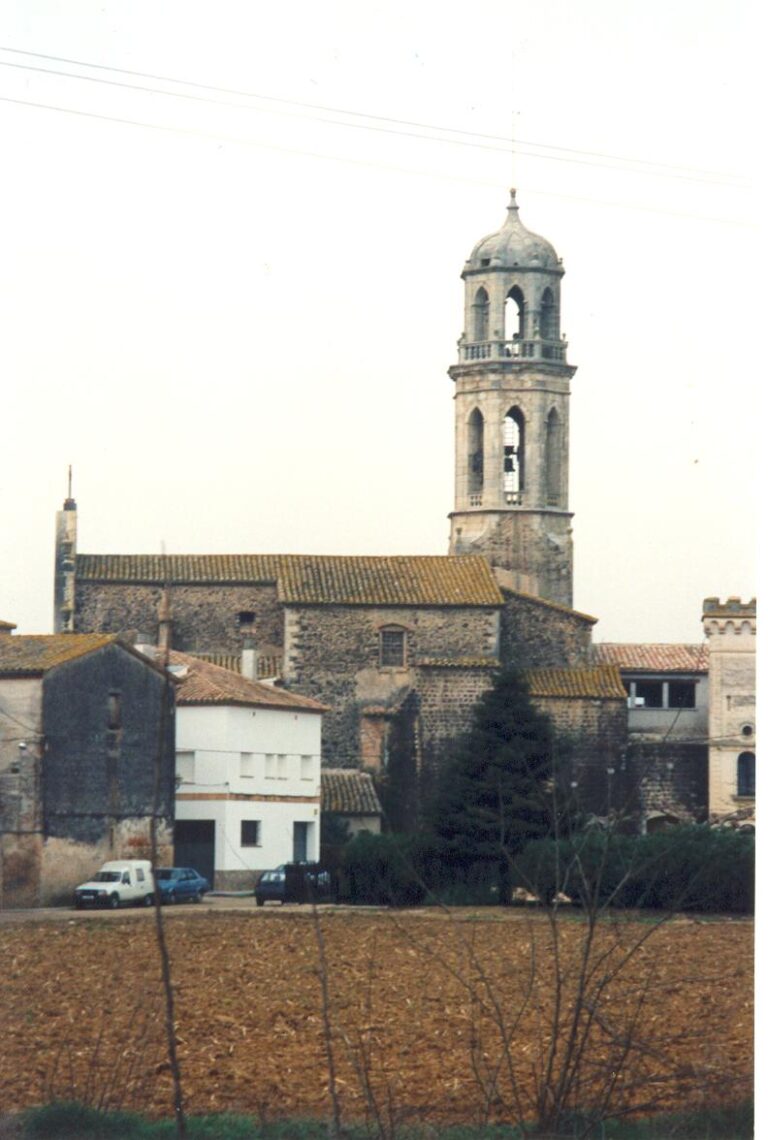
One of its most distinctive elements is the bell tower, considered the tallest and most slender in the La Selva region, standing 40 metres high. It was built using one of the old towers of the castle, making the building a meeting point between the medieval past and later reforms. The lower section, with a square plan and volcanic stone, contrasts with the octagonal upper body, built with well-cut nummulitic stone from Girona. The pointed windows, balustrade and pointed dome reinforce its presence and make it one of the most recognisable silhouettes in Vilobí.
The church also preserves the memory of more recent episodes in local history. In 1936 it suffered a fire and, after the Civil War, it was restored. The current altarpiece of the main altar dates from 1955, and the bell tower was restored in 1999. As part of Enselva’t, Sant Esteve de Vilobí is a key visit for understanding how the castle, the parish, modern reforms and village life have overlapped in the same building, turning it into one of the municipality’s main heritage landmarks.




8 June, 2026
5 June, 2026 - Heritage
5 June, 2026 - Museums
5 June, 2026
4 June, 2026 - Local product
3 June, 2026 - Walking route
Subscribe to the newsletter





Pla de Recuperació, Transformació i Resilência - Finançat per la Unió Europea - Next Generation UE



AODL en l\'ámbit del Patrimoni. Acció subvencionada pel Servei Públic d\'Ocupació de Catalunya en el marc dels Programes de Suport al Desenvolupament local.