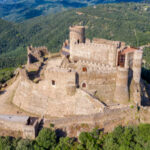
Sant Agustí de Lloret Salvatge was a medieval population center and a former parish, currently no longer used for worship. The hermitage had initially been dedicated to Sant Julià. Around it are the farmhouses of Can Sitges, Can Puig de Lloret Salvatge, La Gultresa, and Can Roure.
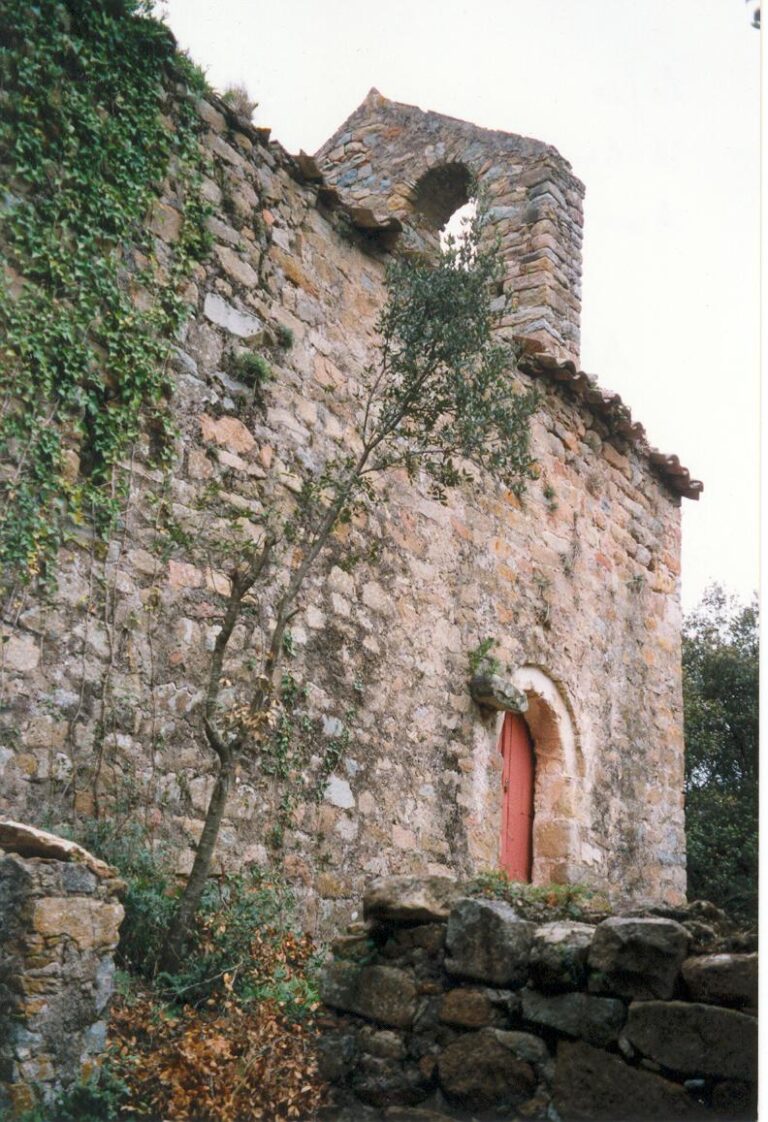
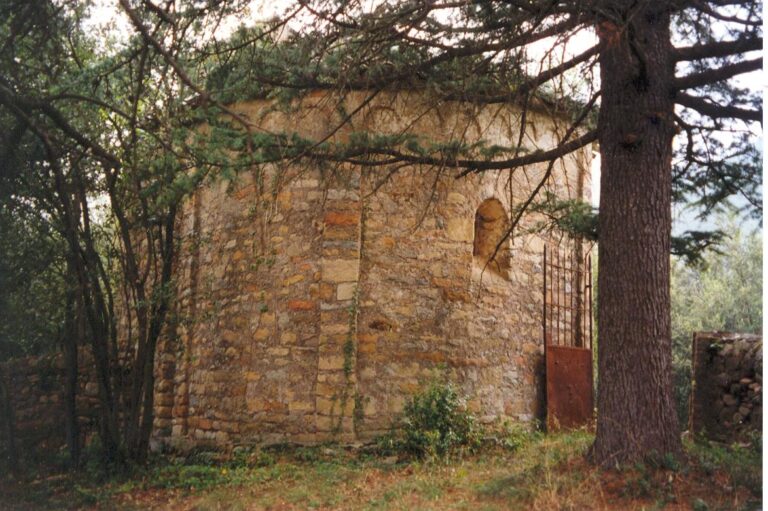
Originally, it was a Romanesque construction with a single nave and a semicircular apse, externally decorated with the characteristic Lombard bands and arches of the 11th century. The earthquakes of 1427, with their epicenter in Lloret Salvatge, caused the nave to collapse. The Romanesque apse, thanks to its compact shape, withstood the cataclysm. In the 16th century, the walls and the vault were rebuilt. It was then that the entrance door was placed on the northern wall, something not very common in temples. Later, a bell gable was built on the roof ridge. Behind the apse there had been the enclosure of the old cemetery.
Until the early 20th century, a polychrome wooden Virgin Mary from the 13th century, now disappeared, was venerated there. A few years ago, the old stone font also disappeared, of which only the base remains inside. Since 2018, the church and its archaeological surroundings have been undergoing restoration and recovery, a rather unusual medieval complex in Catalonia.




Subscribe to the newsletter





Pla de Recuperació, Transformació i Resilência - Finançat per la Unió Europea - Next Generation UE



AODL en l'ámbit del nou model de gestió turística de la Selva. Acció subvencionada pel Servei Públic d'Ocupació de Catalunya en el marc dels Programes de Suport al Desenvolupament local.