The Way of St. James is a pilgrimage path that leads, from various places in Europe, to Santiago de Compostela, where it is said the remains of the apostle St. James rest, one of the twelve apostles of Jesus who preached across the Iberian Peninsula. According to the story, St. James was beheaded in Jerusalem in 44 AD and his remains were taken to the end of the world, which at that time, when the Earth was thought to be flat, was believed to be Fisterra (Galicia). The story continues when in 814 a shepherd saw a star that indicated where the saint’s tomb was, and Bishop Teodomir established that the remains there belonged to St. James. From that moment, the site attracted people from all over who went to Santiago de Compostela on pilgrimage, giving rise to a large number of routes to reach it.
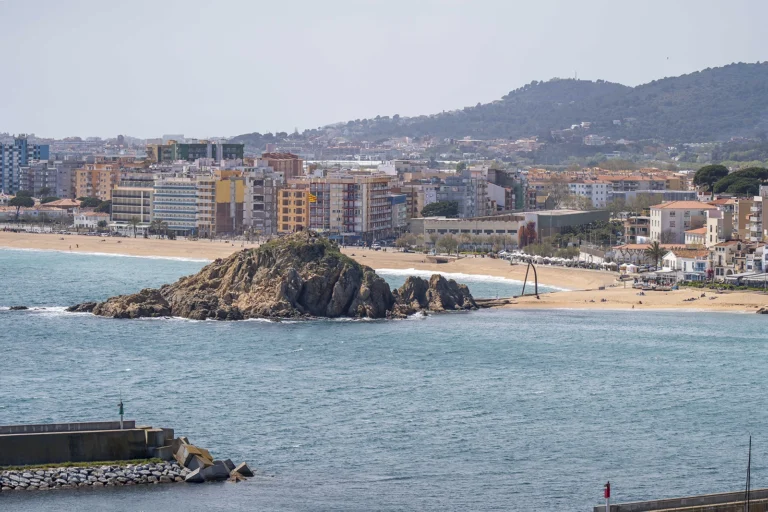
In la Selva, you can find St. James paths in the three territorial realities of the comarca: the mountains, the plain and the coast. The entry of these paths into the comarca occurs at two points in the northern zone from the city of Girona, and these paths lead to the neighbouring comarcas of Garrotxa and Osona to the north, to Vallès Oriental in the central area, and to Maresme along the coast.
As you can see, there is not a single route, but many access routes to the path. The St. James paths in Catalunya merge from different branches, leading to Zaragoza and the old French Way, towards Jaca or Logroño. You can walk any of the sections of the St. James path that pass through la Selva, on the way to Santiago de Compostela. Undertaking this pilgrimage not only represents a spiritual and introspective journey, but also the privilege of enjoying the full natural, scenic and cultural richness offered by this «path of paths».


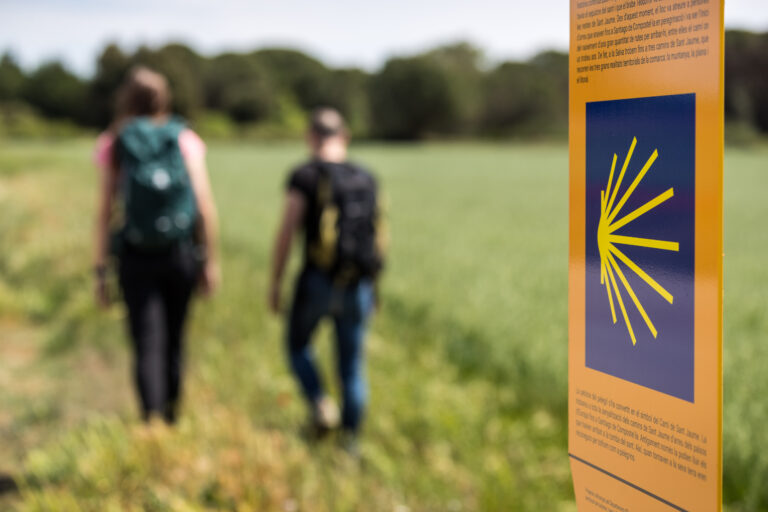
The pilgrim’s shell has become the symbol of St. James, and you will find it on all the signage of routes of St. James throughout Europe, all the way to Santiago de Compostela.
You can follow the St. James by following the characteristic pilgrim shell plaques, like the one in the image on the right, which you will find throughout the route, or by following the yellow painted marks that appear along the entire path.


6 October, 2026 - Essències
8 June, 2026
5 June, 2026
Subscribe to the newsletter





Recovery, Transformation and Resilience Plan – Funded by the European Union – NextGenerationEU



Local Development and Employment Officer (AODL) within the new tourism management model for La Selva. Initiative subsidised by the Public Employment Service of Catalonia as part of the Local Development Support Programmes.