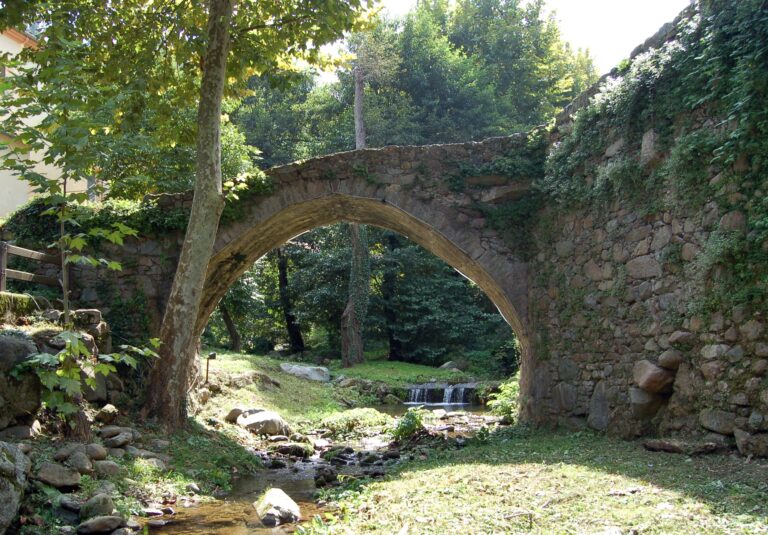
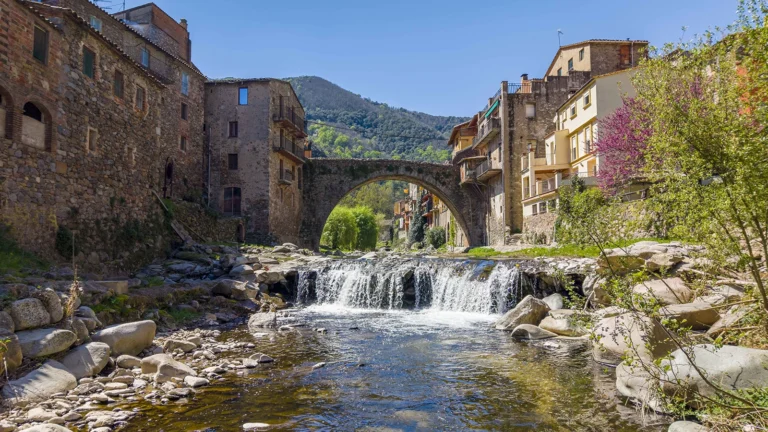
The Can Vidal bridge is one of those elements that often goes unnoticed, yet it explains very well how people once lived in and moved through the territory. Set in a natural environment, this bridge is linked to old paths and to the need to cross streams and watercourses at a time when movement through the rural world depended on simple but essential infrastructure.
Its structure responds to a very clear function: to make passage possible. It was not built to stand out, but to solve a practical need and connect farmhouses, fields, paths and nearby settlements. This is precisely where its heritage value lies, as it preserves the memory of an older form of mobility, on foot, with animals or with carts, and of a territory organised through these small crossings.
As part of Enselva’t, the Can Vidal bridge invites visitors to look at heritage on a different scale. Not everything that explains the history of a place is monumental. Sometimes, a discreet construction like this helps us better understand everyday life, routes and the practical relationship rural communities maintained with the landscape.




8 June, 2026
5 June, 2026
5 June, 2026 - Heritage
5 June, 2026 - Museums
4 June, 2026 - Local product
3 June, 2026 - Walking route
Subscribe to the newsletter





Pla de Recuperació, Transformació i Resilência - Finançat per la Unió Europea - Next Generation UE



AODL en l\'ámbit del Patrimoni. Acció subvencionada pel Servei Públic d\'Ocupació de Catalunya en el marc dels Programes de Suport al Desenvolupament local.