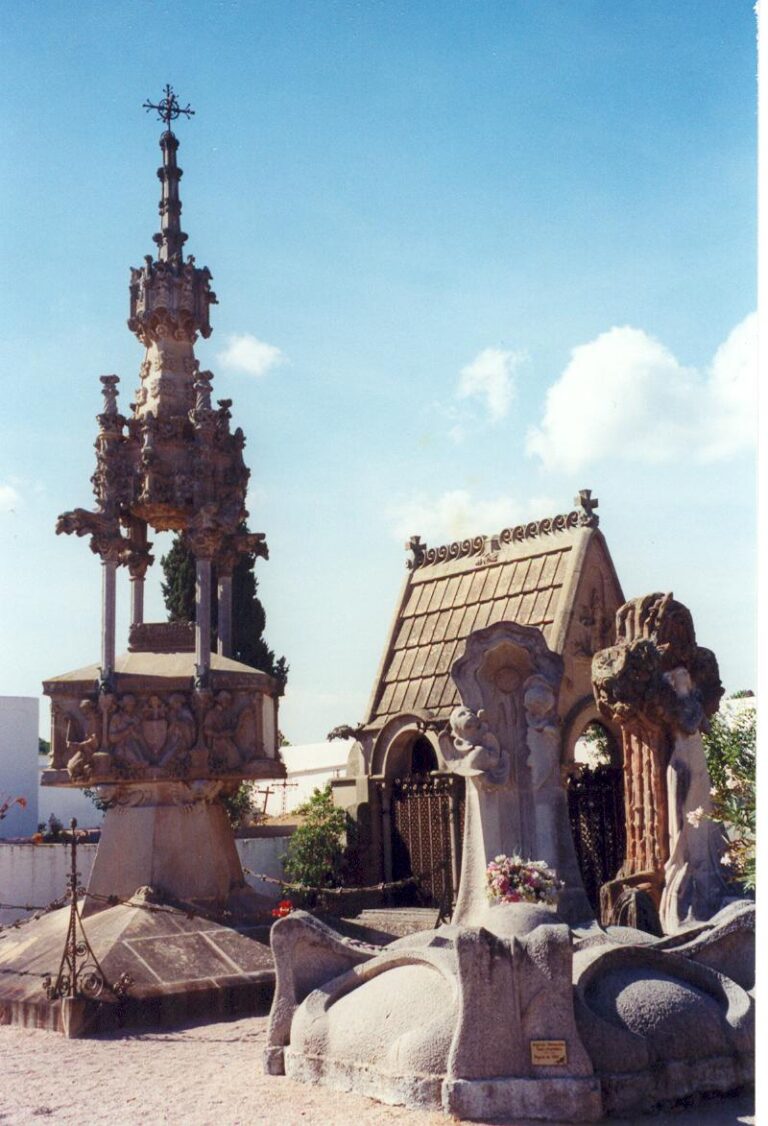
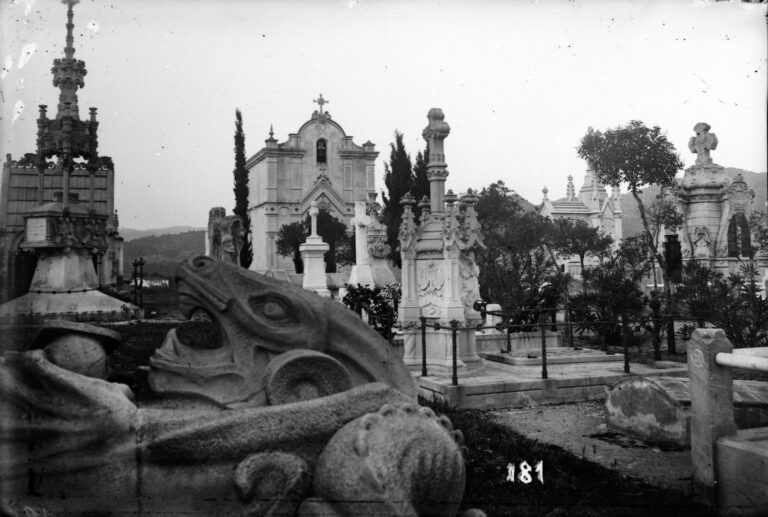
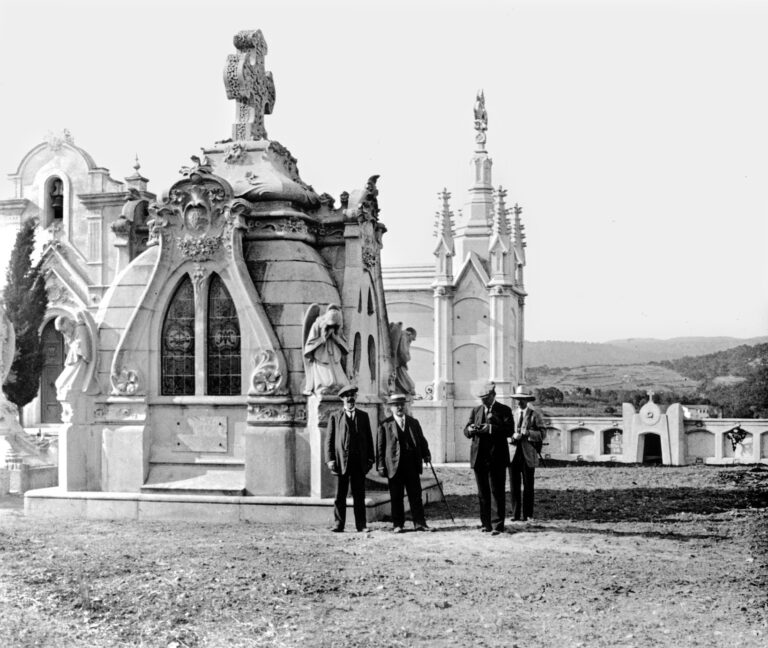
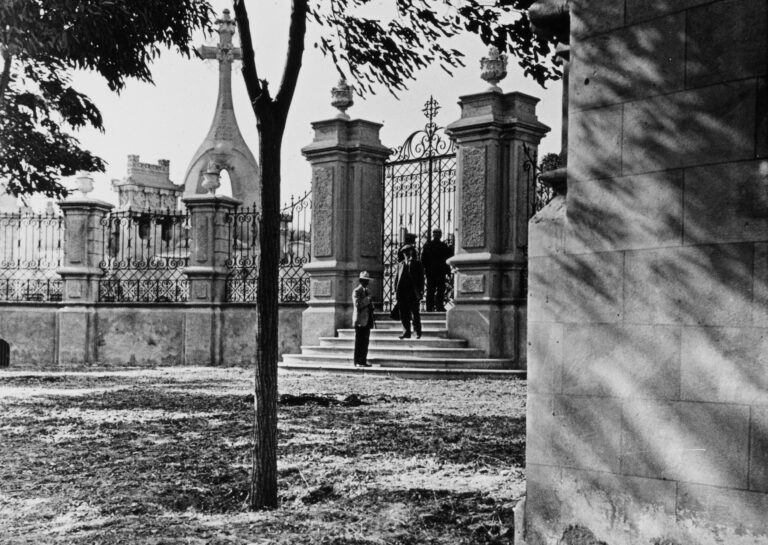
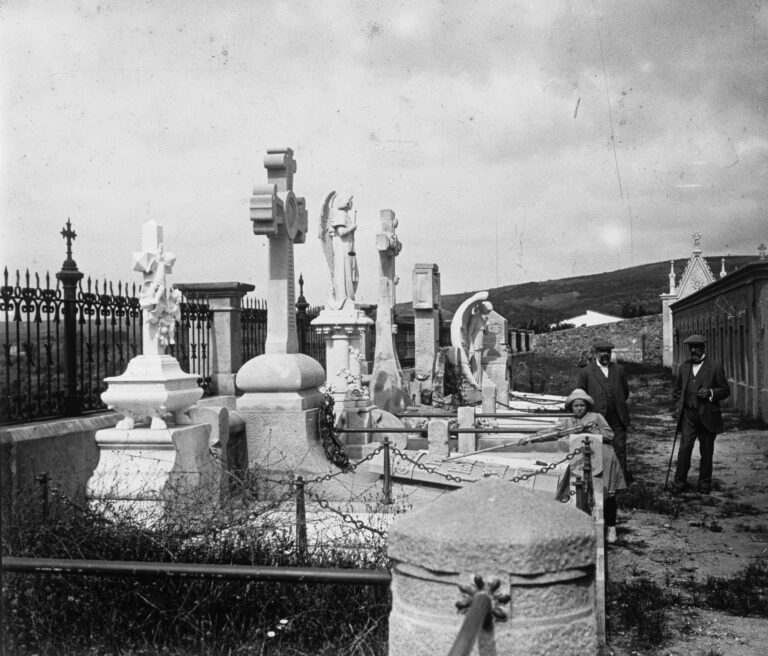
The Municipal Cemetery of Lloret de Mar contains one of the most important ensembles of modernist funerary sculpture in the country. It brings together all artistic trends and stands as a remarkable example of early 20th-century styles, making it a true open-air museum.
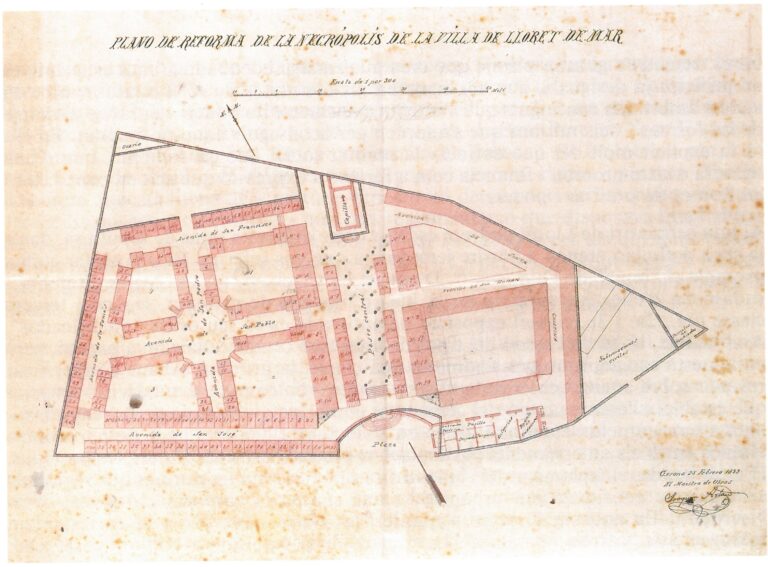
In 1891, municipal records noted the need to build a new cemetery. The project was commissioned the following year, in 1892, to architect Joaquim Artau i Fabregas. The construction of the new cemetery was made possible thanks to private initiative; its funding came from families closely linked to overseas trade and the Barcelona bourgeoisie, which enabled the participation of renowned architects such as Puig i Cadafalch.
The organisation and layout of the cemetery are carefully planned and structured, following the model of major cities of the time: avenues, promenades, small squares, blocks… The space as a whole reflects social hierarchy: along the main avenue are the tombs of private patrons, some of whom had made fortunes in America; on both sides of the main avenue are second- and third-class hypogea, and further away there is an area reserved for civil burials and the unbaptised.





Subscribe to the newsletter





Recovery, Transformation and Resilience Plan – Funded by the European Union – NextGenerationEU



Local Development and Employment Officer (AODL) within the new tourism management model for La Selva. Initiative subsidised by the Public Employment Service of Catalonia as part of the Local Development Support Programmes.