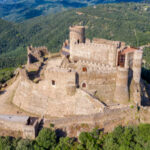
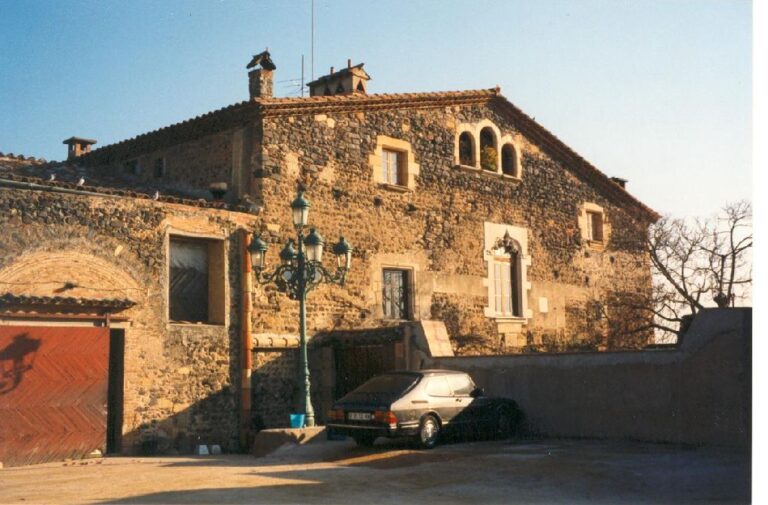
The Torre Cartellà (Cartellà Tower) country house is remarkable for its unique structure and the various annexes added to it over the years. This magnificent residence is spread over three levels and has a somewhat irregular floor plan. Its façade reveals a certain harmony between the decorative elements, especially noticeable on the lower and middle floors, with several windows of monolithic lintels and stone jambs.
In contrast, the third floor attic features a triplearched trifora window. The upper covering, typical of buildings in the region, is a gable roof. Within the enclosure, an inner courtyard houses a chapel dedicated to Sant Jaume (Saint James), featuring a semi-circular apse and a voussoired doorway beckoning visitors to explore the interior, which is enhanced by pilasters decorated with motifs referencing the saint, as well as a male bust. The façade of the chapel, ornamented with Renaissance details, adds a touch of elegance and distinction to the whole.
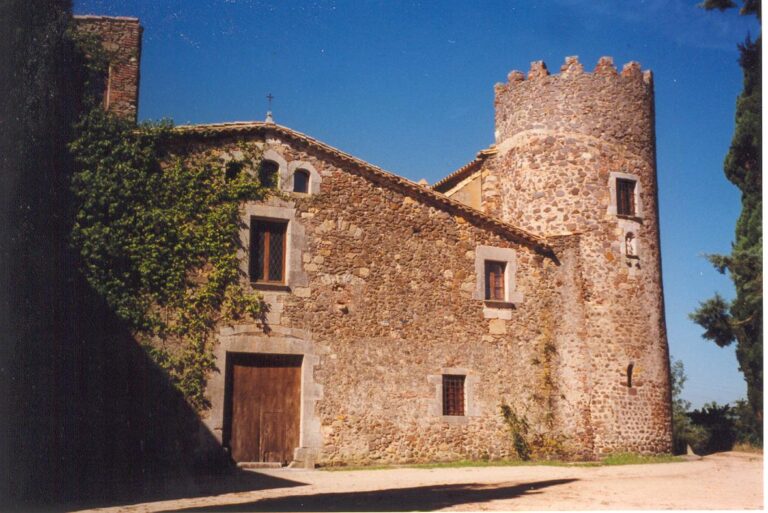
A particularly striking element of the ensemble is the tower located at one corner of the property. Circular in shape and four storeys high, it is crowned with battlements and, just below its upper window, features a niche housing an image of the Virgin Mary and child. The tower suffered significant damage during the first Carlist War, around 1840. The history of Cartellà Tower is closely linked to the Cartellà lineage, which dates back to 1159, with the union of Arnau Guillem de Cartellà and Ermessenda, of the Maçanet family. The high point of its prestige came in 1729, when Philip V granted the title of marquis to the owners of the house at that time. Throughout the 18th century the property changed hands repeatedly, until it was finally auctioned off for charity in 1865.





8 June, 2026
5 June, 2026 - Heritage

5 June, 2026 - Museums
5 June, 2026

4 June, 2026 - Local product
3 June, 2026 - Walking route
Subscribe to the newsletter





Pla de Recuperació, Transformació i Resilência - Finançat per la Unió Europea - Next Generation UE



AODL en l\'ámbit del Patrimoni. Acció subvencionada pel Servei Públic d\'Ocupació de Catalunya en el marc dels Programes de Suport al Desenvolupament local.