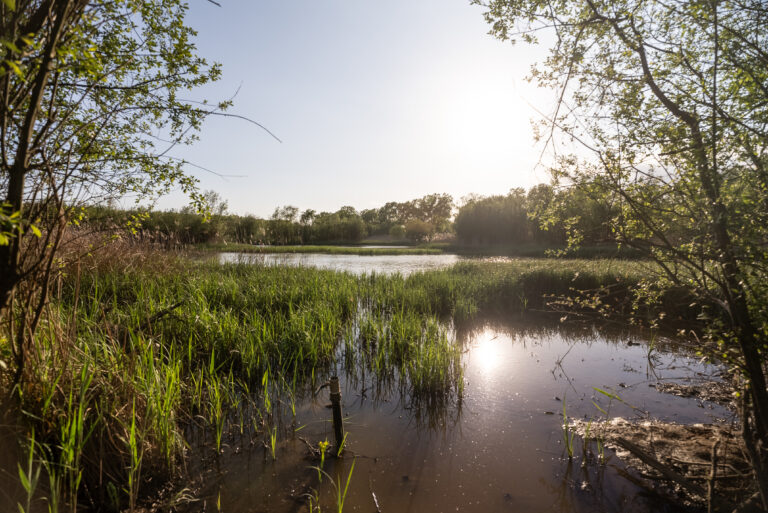
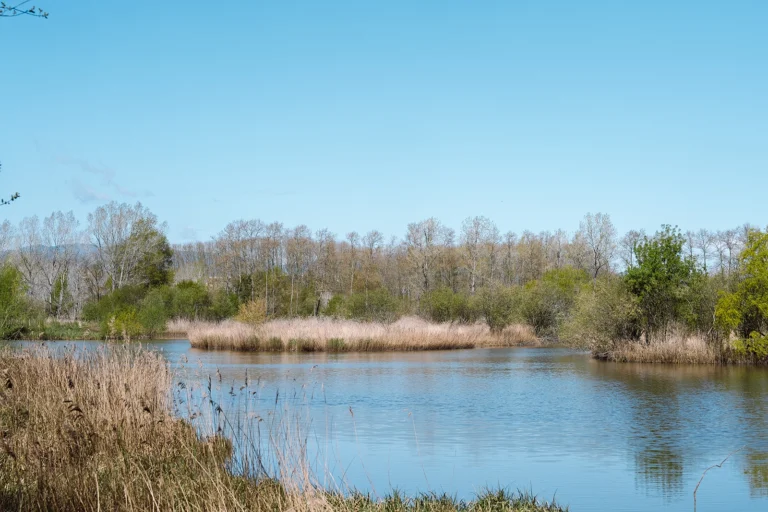
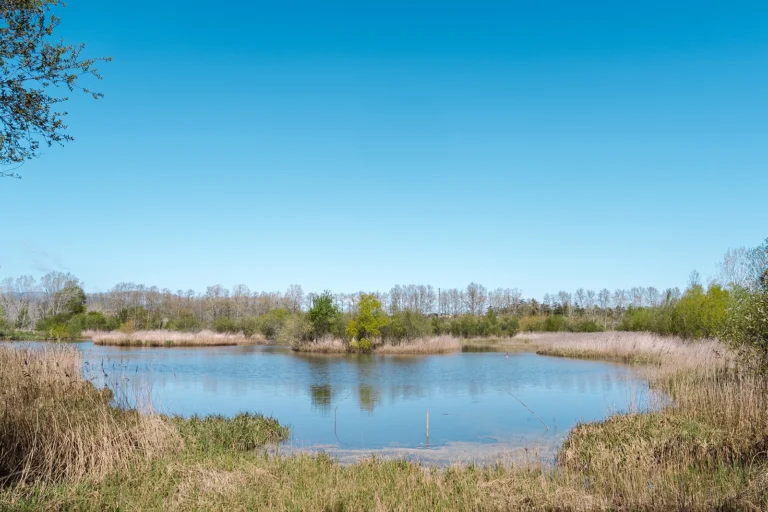
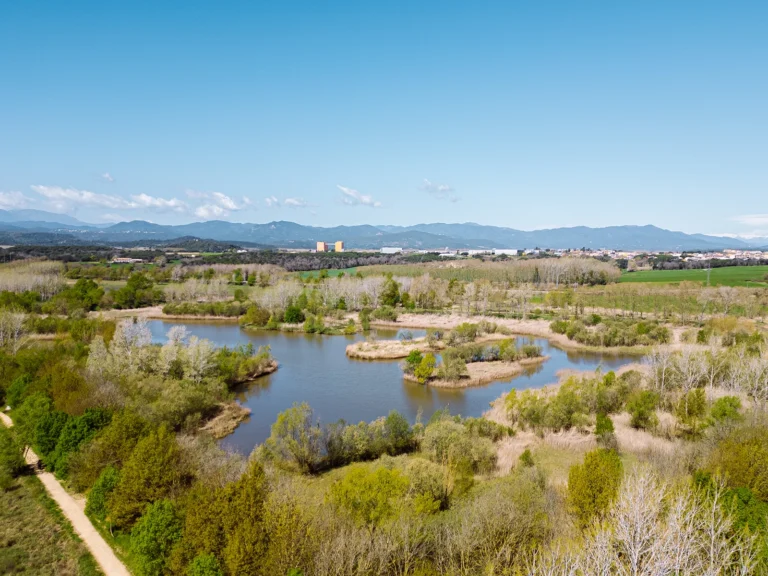
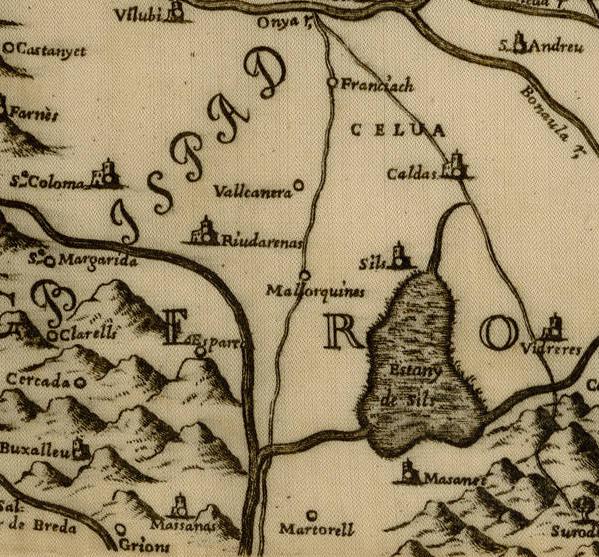
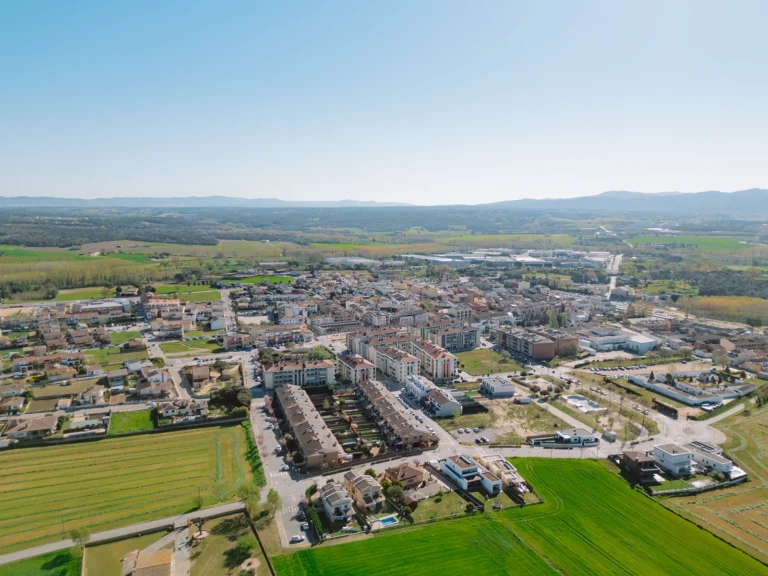
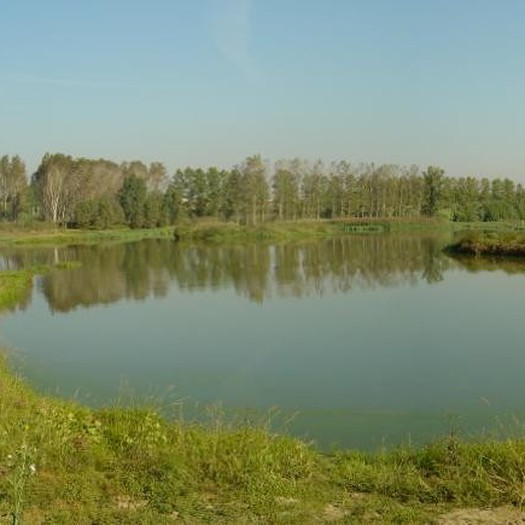
The lakes are the largest lagoon in the Selva plain, which, according to ancient chroniclers, measured 7 km long and 1.5 km wide. Remains of human occupation dating back between 150,000 and 300,000 years have been found there. Due to the stagnant waters of the area, mosquitoes abounded, which were the main agents transmitting diseases such as malaria or malaria, very common among the inhabitants of swampy areas. Following the recommendations of enlightened hygienists of the 18th and 19th centuries, drainage and drying were promoted to combat these diseases.
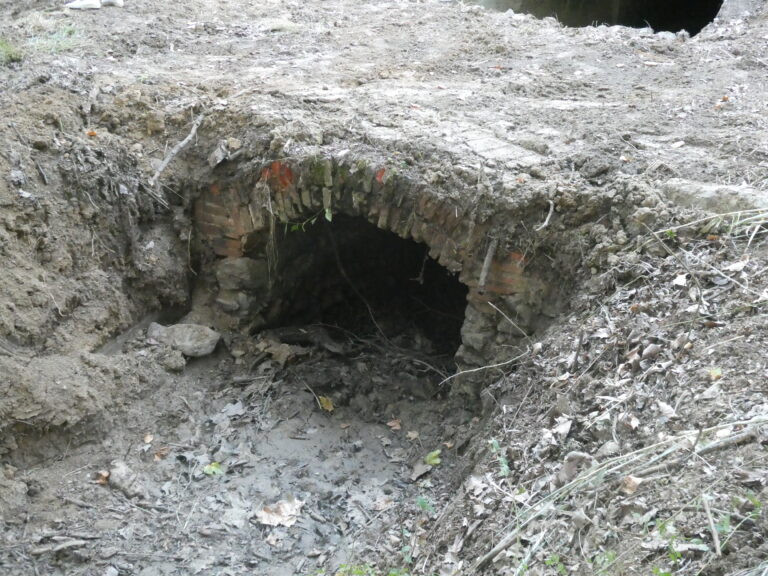
The land was drained in the early 20th century, allowing for the expansion of cultivation areas, which was the main economic resource for the inhabitants of the area. In the mid-20th century, there were changes in land use due to the decline of agricultural operations and the growth of poplar plantations. In addition, the land was divided by the construction of the motorway, which further fragmented this natural space.
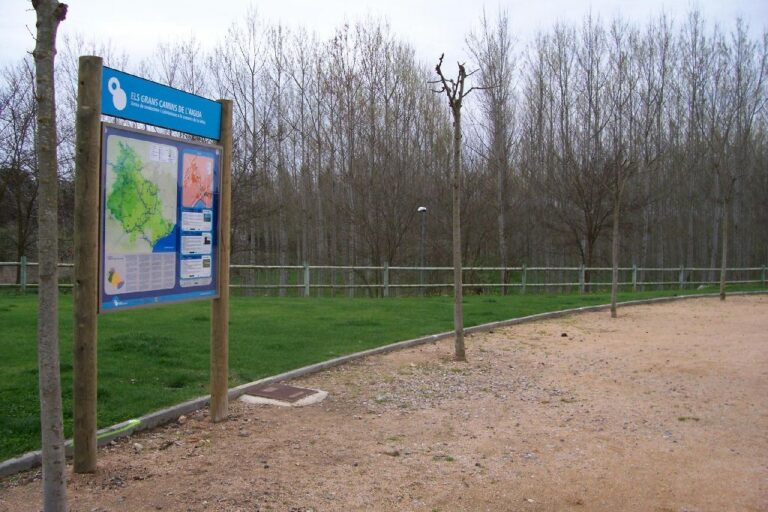
In recent years, several interventions have been carried out with the aim of partially recovering the landscape and its natural wealth. Currently, some native species can be found there that denote the good quality of the area, such as pond turtles, bluegills, newts, skunks and otters.







Subscribe to the newsletter





Recovery, Transformation and Resilience Plan – Funded by the European Union – NextGenerationEU



Local Development and Employment Officer (AODL) within the new tourism management model for La Selva. Initiative subsidised by the Public Employment Service of Catalonia as part of the Local Development Support Programmes.