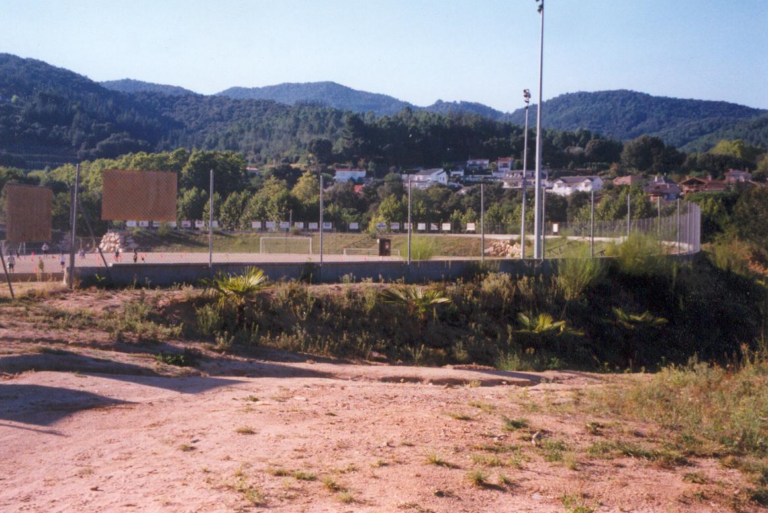
The Iberian farmhouse known as Can Pons was discovered in 1993 while the town’s football field was being excavated. This archaeological site is quite unique and therefore significant, as there are few examples of isolated rural settlements or dwellings from the Iberian era in this terrain. Its existence suggests that Iberian settlements in the area were not only located on the mid-elevation hills of the Montseny, and that the valley of the stream of Arbúcies was and would become an important communication route between the Selvatana plain, the sea and the Osona plain.
Can Pons was inhabited between 150 BC and 80 BC. Throughout this period, many ancient fortified Iberian towns were abandoned and their people came into contact with Roman culture. Despite the influences of Romanization, the inhabitants of Can Pons evidently maintained some of their traditions, such as handmade ceramics and an economy based on subsistence and family farming.
As a dwelling dedicated to small-scale agricultural work, Can Pons was a real farmhouse. Here they cultivated various types of plants, including grapevines, almond trees, legumes such as beans, and cereals such as barley. Their diet was supplemented by hunting and fishing, and they were also engaged in cattle breeding. They raised sheep and, with their wool, produced fabrics that were possibly traded, as implied by the discovery of sixty pieces of loom weights in one of the rooms of the farmhouse.
One of the mysteries surrounding the Iberian farmhouse of Can Pons is the circumstances of its sudden abandonment. Archaeological work confirms that items in the various rooms had remained in place: looms stood in one corner of a room; different vessels as well, probably having fallen from a shelf… This suggests that the inhabitants may have fled the property in a hurry, without time to gather and save their belongings.


Subscribe to the newsletter





Pla de Recuperació, Transformació i Resilência - Finançat per la Unió Europea - Next Generation UE



AODL en l'ámbit del nou model de gestió turística de la Selva. Acció subvencionada pel Servei Públic d'Ocupació de Catalunya en el marc dels Programes de Suport al Desenvolupament local.