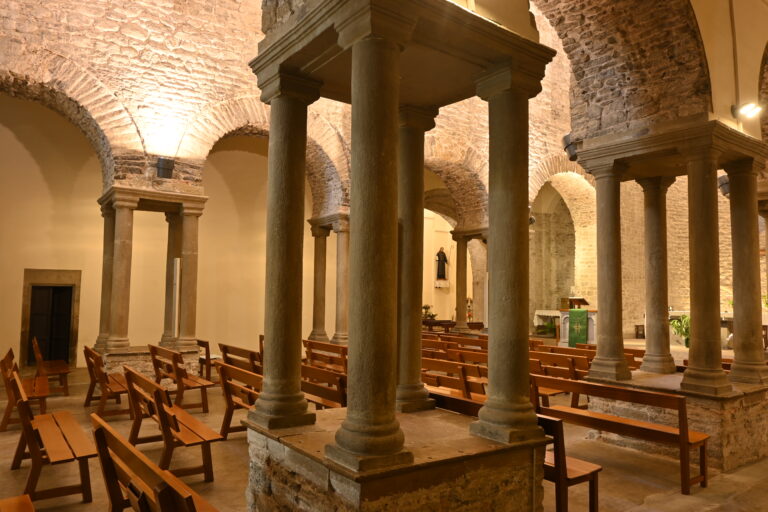
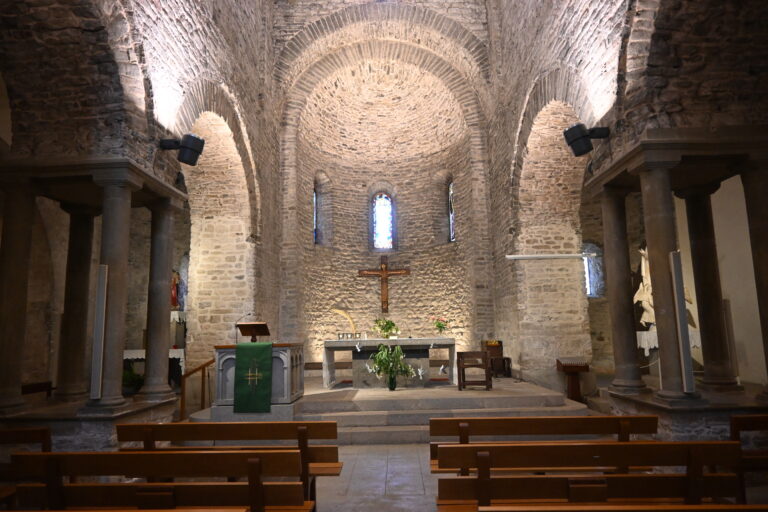
The Benedictine monastery of Santa Maria d’Amer, founded around the year 820 by Abbot Deodat, was consecrated in 949 by Bishop Gotmar as a replacement for the monastery of Sant Medir and Sant Genís. The monastery gradually became powerful and, in 1080, following the Gregorian agrarian reform, it was the only one in the lands of Girona that was not united with any external house. The full independence and autonomy it enjoyed were confirmed directly from Rome in 1186 by a papal bull of Clement, which also corroborated the monastery’s freedoms and possessions. Despite the effects of the earthquakes of the 15th century, during which the cloister and part of the church collapsed, the importance of the monastery remained strong: in 1485, the agreement that preceded the resolution of the remença conflict was signed there, and in the 16th and 17th centuries, some abbots of Amer became presidents of the Generalitat. The monastery was closed following the exclaustration of 1835. The most notable Romanesque element of the complex is the church, which currently serves as the parish temple. Topped by four apses with the typical blind arcading on the exterior, the main structure of the three naves and the base of the bell tower are also Romanesque. The remains of the cloister were located during excavations in 1989 and currently remain buried, while the monastic dependencies belong to renovations carried out after the earthquakes.










Subscribe to the newsletter





Recovery, Transformation and Resilience Plan – Funded by the European Union – NextGenerationEU



Local Development and Employment Officer (AODL) within the new tourism management model for La Selva. Initiative subsidised by the Public Employment Service of Catalonia as part of the Local Development Support Programmes.