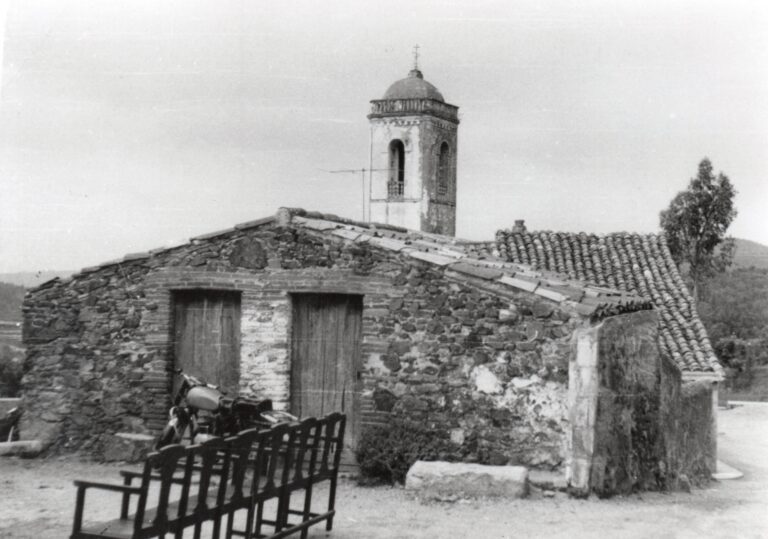
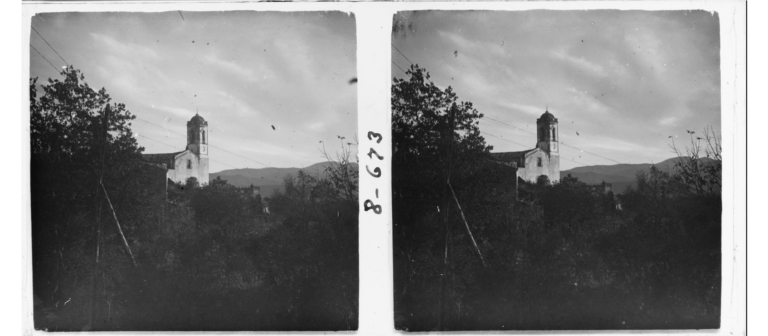
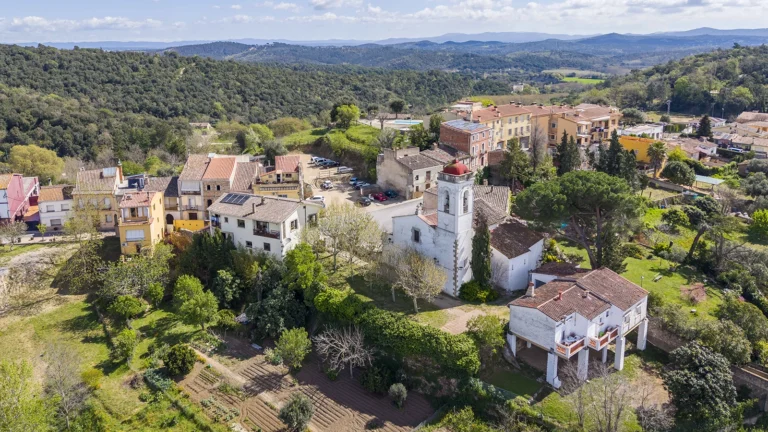
Records of this parish church date back to 1093, when it was listed as a possession of the Monastery of Breda. Originally a Romanesque construction, only the semi-circular apse remains of the original building. The rest was significantly renovated in the 18th century.
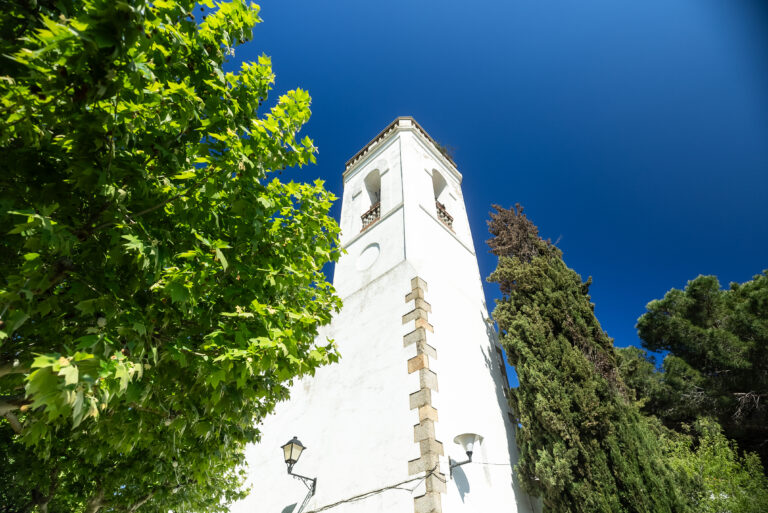
Onto the primitive construction, with a single rectangular nave and semi-circular apse, the side chapels, sacristy, and bell tower were added later. The building that we see today is primarily the result of the restoration projects of the 17th and 18 centuries. The apse, however, is clearly Romanesque, made from ashlar and decorated with a frieze of Lombard bands in sets of six between lesenes, finished with a sawtooth frieze and a simple molding on the eaves. The nave has a barrel-vaulted ceiling. On the main façade, completely whitewashed, there is a rectangular door with stone jambs and lintel, topped by a niche. Above, there is a window with the same structure as the door. The square bell tower has elongated round-arched windows on each side and is topped with a balustrade.
The French army destroyed the church in the invasion of 1809, and it was rebuilt after the Civil War (1939). Moreover, a few years later, the cemetery was relocated from its previous position just in front of the church.





Subscribe to the newsletter





Recovery, Transformation and Resilience Plan – Funded by the European Union – NextGenerationEU



Local Development and Employment Officer (AODL) within the new tourism management model for La Selva. Initiative subsidised by the Public Employment Service of Catalonia as part of the Local Development Support Programmes.